

How Safe is Coasteering?
March 18th, 2021
We discuss the safety procedure we follow during coasteering sessions on the Jurassic Coast.
We are often asked “is coasteering safe?”. So, as we approach the much anticipated Spring and Summer season, we want to answer this question for you. We also explain why coasteering should never be confused with Tombstoning.
Over the years we have worked hard to ensure that the activities we offer (particularly Coasteering) is as safe as we could possibly make it when operating in a dynamic and ever-changing environment.
What is the difference between Tombstoning and Coasteering?
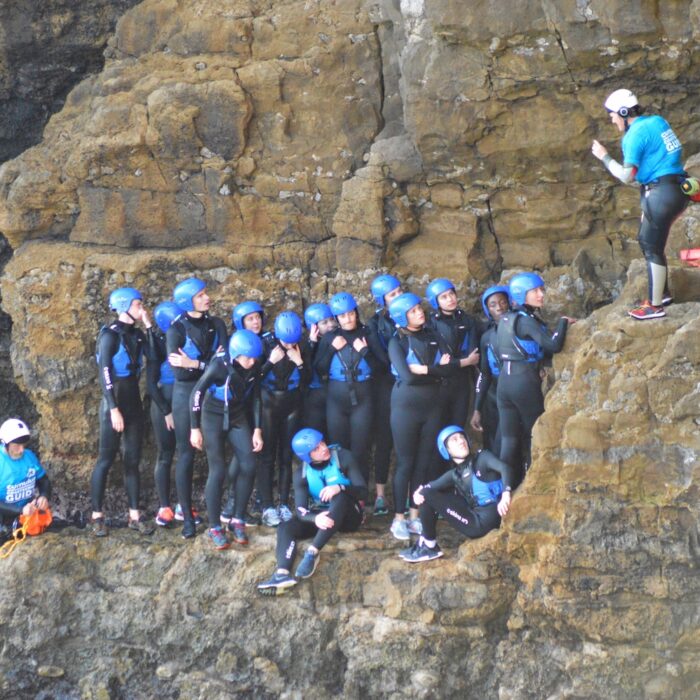
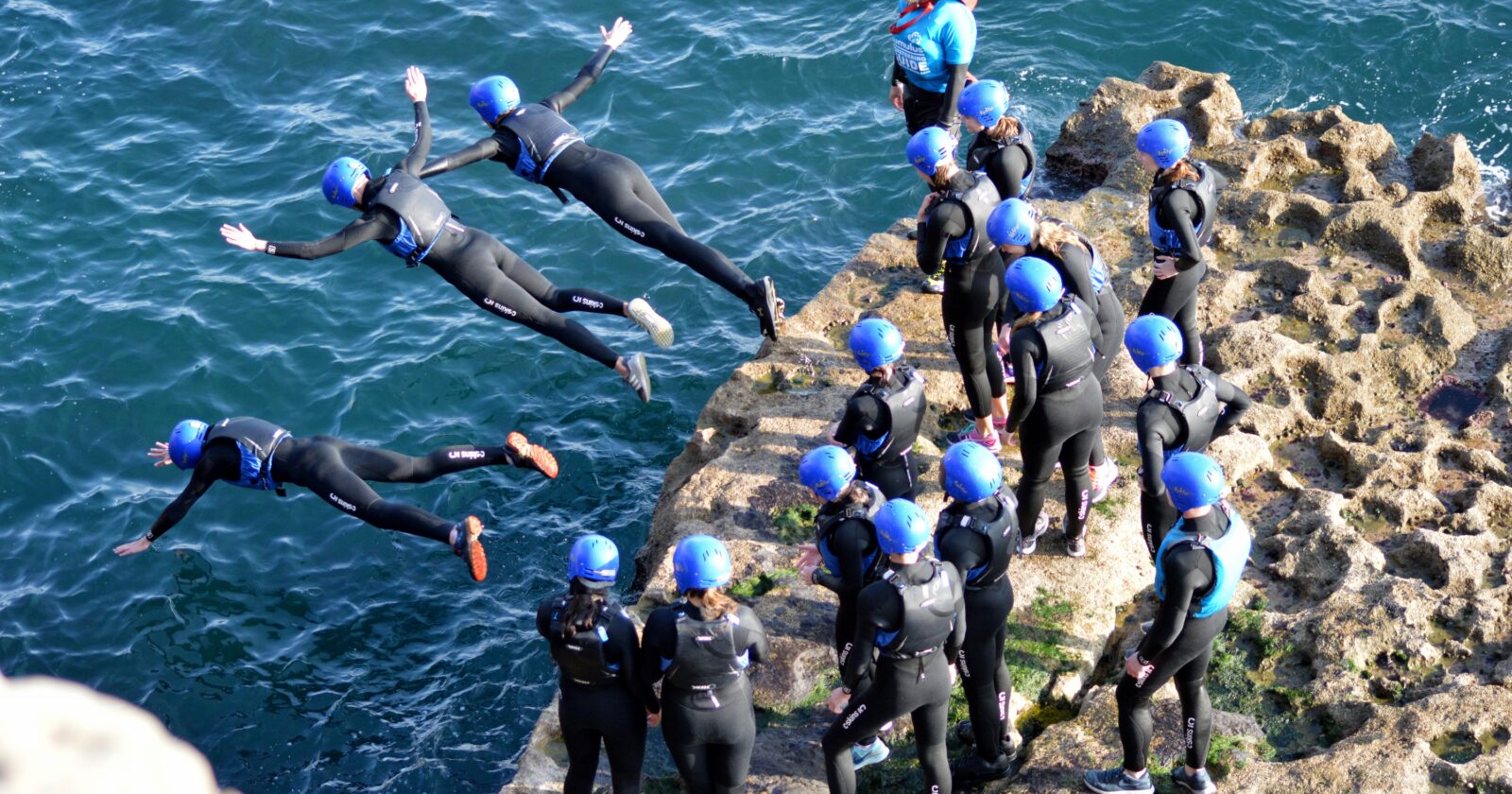
Coasteering and Tombstoning are two very different activities. Coasteering is a sea and cliff based exploration activity led by two professionally trained guides that hold water safety and First Aid Certificates. It is a fun way to safely explore the stunning and rugged Jurassic Coastline. This water-based activity involves low level traversing, scrambling, climbing, swimming, jumping and cave exploration. The guides utilise risk assessed features (Jumps) selected depending on many factors like group ability, the sea state and the wind.
Tombstoning, as it is called by most and the media, is totally unsupervised jumping from cliffs into the sea – never confuse the two things. As we saw last year at Durdle Door after the first lockdown, a group of young men from out of the area climbed to the top of the Durdle Door arch and were jeered and encouraged to jump from the top of the 200ft limestone arch. This very sadly resulted in multiple casualties and severe life changing injuries.
The reckless actions of individuals must not tarnish the safe and exciting activity of Coasteering, where preparation and guidance ensure a fun-filled, safe adventure experience.



Prior Planning Prevents Poor Performance
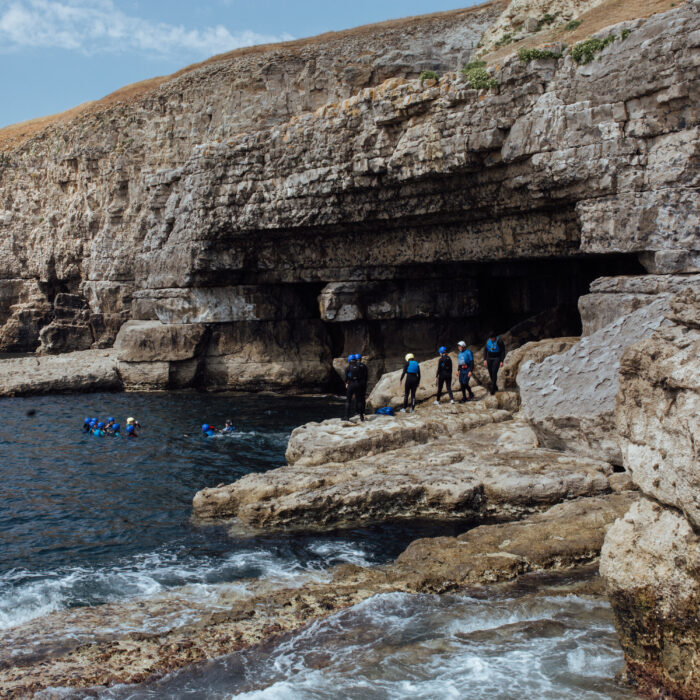
From the beginning, we carefully explored our stretch of coastline to fully understand the impact of the fluctuating sea state and winds. We checked the depths of potential jumping spots at various tide times to ensure jump safety. At the start of every season we check these locations and jump points for any new hazards that may have appeared throughout the winter months and update our risk assessment records accordingly. All this information is kept on file which is required for our AALS License (Adventure Activities Licensing Service).
We check our minor incidents log before the start of every season and use this information to update our risk assessments. Each of our coasteering routes have a number of different options, depending on both the conditions and the ability of the group. Our guides are trained to undertake dynamic assessments as the session progresses meaning that they tailor the session with safety in mind. The route is not set-in-stone and starts with jumps from knee-high, with progression to the next level at the discretion of the guide who is constantly assessing the customer’s ability.

Experienced and highly qualified guides
Our guides are all qualified beach lifeguards (they hold the same qualifications as the guys in red that patrol our beaches) and/or qualified in outdoor first aid and receive further site-specific in-house training by an external technical advisor. There is always a lead guide in charge of each session with a second guide in support.
One thing that we are always keen to stress is that, through our ‘Challenge by Choice’ ethos, there is never any requirement for a member of the group to participate in a part of a session that they are not capable of or not comfortable with. We frequently adjust sessions to ensure that everyone has the best time possible. This is our standard operating procedure (SOP). We also plan for how we would respond to and deal with any emergencies and regularly undertake training with the RNLI and Coastguard, although clearly, we hope that we never have to implement our Emergency Action Plan (EAP).